
The Authority Gap in Agentic Engineering
When you run hopsule decision list --status accepted from your terminal, you are not just querying a database; you are surfacing the collective judgment of your engineering organization. In a modern development environment, this judgment is the most valuable asset you possess. However, a significant gap has emerged in the last year. While our human developers are increasingly aware of the decisions that govern our architecture, our AI agents—the very tools we rely on for velocity—remain functionally "amnesiac" regarding our organizational constraints.
We have seen this play out in dozens of teams. An AI agent is tasked with refactoring a service. It suggests a pattern that, in isolation, looks elegant. But it unknowingly violates a decision made six months ago to deprecate that specific pattern due to scalability failures. The agent isn't "wrong" in a general sense, but it is wrong for your organization. It lacks the remembrance of past failures and the authority of current commitments. This is why we built the Hopsule MCP (Model Context Protocol) server. It is designed to bridge the gap between organizational memory and AI execution, ensuring that every agent operates with the full weight of your team's decision history.
As the CTO of Hopsule, I have watched how teams struggle when their AI tools operate in a vacuum. The Hopsule MCP is our answer to the "hallucination of authority." It provides a read-only, context-aware layer that transforms an AI agent from a generic code generator into a decision-aware collaborator. By connecting your agents to the Hopsule Dashboard and your existing Context Packs, you ensure that enforcement becomes a natural byproduct of remembrance, not a manual gate of control.
Understanding Hopsule MCP: The Protocol of Remembrance
The Model Context Protocol (MCP) is an open standard that allows AI models to access external data sources and tools securely. At Hopsule, we recognized early on that decisions are not just static text; they are first-class, enforceable entities. Hopsule MCP serves as the translation layer between your team's Hopsule Dashboard and the AI models running in environments like Cursor, Claude Desktop, or custom agentic workflows. It allows these models to "ask" Hopsule for the context they need before they suggest a single line of code.
The core philosophy of Hopsule is that enforcement is remembrance. When an agent is decision-aware, it doesn't need to be "policed" by a human reviewer as strictly because it already knows the constraints. Hopsule MCP exposes three primary resources to any connected agent:
Accepted Decisions: The explicit commitments your team has agreed to follow. These are the "laws" of your codebase.
Memories: The append-only history of why those decisions were made. This provides the reasoning and the "lessons learned" that prevent the agent from suggesting discarded alternatives.
Context Packs (Capsules): Portable bundles of decisions and memories that provide project-specific or domain-specific context.
By integrating Hopsule MCP, you are essentially giving your AI agents a "seat at the table." They can see the Knowledge Graph—the visual representation of how decisions relate to one another—and understand the hierarchy of governance within your organization. This is not about restricting the agent; it is about empowering it with the organizational judgment it needs to be truly effective.
Setting Up the Hopsule MCP Server
Integration begins at the command line. For any developer or engineering leader, the Hopsule CLI is the primary interface for managing the lifecycle of decisions. To make your agents decision-aware, you must first ensure your local environment is authenticated and that the MCP server is configured to point to your organization's memory layer.
Authentication and Configuration
The first step is to authenticate your CLI tool. Run the following command in your terminal:
This will open a secure session with the Hopsule Dashboard, allowing you to generate a token with the appropriate permissions. For MCP integrations, we recommend using a dedicated "Agent Token" which provides read-only access to your decisions and memories. This adheres to our security principle of least privilege—AI agents should be able to remember your decisions, but they should never have the authority to mutate them autonomously.
Once authenticated, you can configure your MCP-compatible IDE or agent. In Cursor, for example, you would point the MCP settings to the Hopsule MCP endpoint. This connection allows the IDE to pull in relevant Context Packs automatically based on the project you are currently working on. The Hopsule MCP server acts as a persistent bridge, ensuring that every query the agent makes is filtered through the lens of your accepted decisions.
Mapping Context Packs to Agent Sessions
One of the most powerful features of Hopsule is the ability to create Capsules—or Context Packs. These are portable bundles of decisions and memories. When setting up Hopsule MCP, you can specify which Capsules should be "Active" for a given agent session. For instance, if an agent is working on your core API, you might activate the "API Governance" and "Security Standards" Capsules.
This command ensures that the agent's memory is populated with the specific constraints relevant to that task. It prevents the agent from being overwhelmed by irrelevant decisions while ensuring it has the authority to enforce the ones that matter. The Hopsule Dashboard provides a real-time view of which Capsules are active across your organization, giving engineering leaders full visibility into the context being provided to their AI tools.
Decision Enforcement in the IDE
The true value of Hopsule MCP is realized when you see it in action within your IDE. When you use Hopsule for VS Code or Cursor, the MCP server works in the background to monitor the code being generated or refactored. Because the agent is decision-aware, it can self-correct before it even presents a suggestion to the developer.
Imagine a scenario where your team has an accepted decision: "All external API calls must use our internal retry wrapper." Without Hopsule MCP, a generic AI agent might suggest using a standard fetch call. With Hopsule MCP, the agent sees the accepted decision in its context window. It understands that fetch is a violation of the "API Governance" Capsule. Instead of suggesting the wrong code, the agent provides the correct implementation and, if prompted, can explain why by citing the linked memory from the Hopsule Dashboard.
This is what we mean by "enforcement is remembrance." The agent isn't being "blocked"; it is being reminded of the team's collective judgment. If a developer intentionally chooses to override a decision, Hopsule for VS Code requires an intentional acknowledgment. This creates a trail of organizational judgment that is captured back into the Hopsule API, ensuring that the decision lifecycle remains intact.
Feature | Standard AI Agent | Hopsule-Aware Agent |
|---|---|---|
Context Awareness | Limited to open files and general training data. | Full access to organizational decisions and memories. |
Decision Alignment | Coincidental; often suggests deprecated patterns. | Guaranteed; aligns with accepted decisions. |
Traceability | None; reasoning is based on probabilistic logic. | High; can cite specific decisions and memories. |
Enforcement | Manual review required for every line. | Automated enforcement via remembrance. |
The Lifecycle of a Decision: From Draft to MCP
For an AI agent to be effective, the decisions it references must be high-quality and current. This is where the Hopsule decision lifecycle comes into play. A decision in Hopsule is not just a piece of text; it is an entity that moves through specific states: Draft, Pending, Accepted, and Deprecated. Only "Accepted" decisions are typically surfaced via Hopsule MCP to agents, ensuring that your AI tools are not acting on unvetted or experimental ideas.
Drafting Decisions with Hopper
The process often starts with Hopper, our built-in AI assistant. Hopper is advisory only—it never makes decisions for you. However, it is incredibly skilled at drafting decisions based on natural language conversations or code patterns it observes. You might say to Hopper, "We've been seeing a lot of issues with how we handle database connections in our lambda functions. Can you draft a decision for a singleton pattern?"
Hopper will then use the existing memories in your Hopsule Dashboard to draft a decision that fits your team's style and existing constraints. Once the draft is created, it moves to the "Pending" state, where human developers—the true authorities—review and accept it. Once accepted, the Hopsule MCP server immediately makes this new decision available to all connected agents. The latency between a human decision and agent awareness is near-zero.
Visualizing with the Knowledge Graph
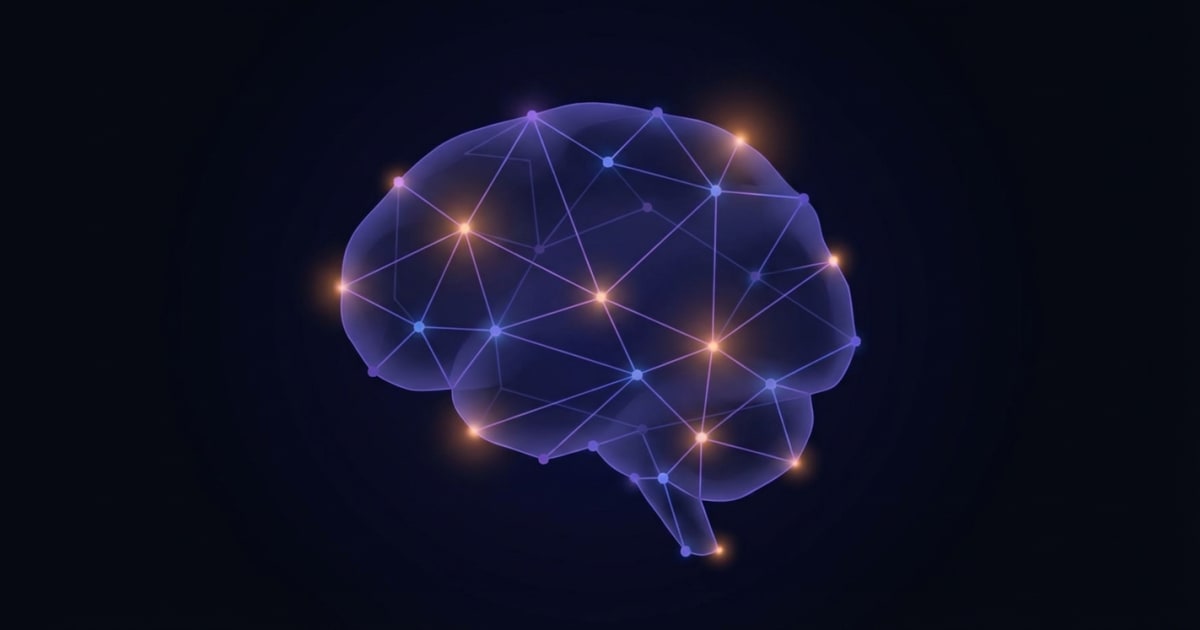
As your organization grows, the number of decisions can become overwhelming. The Knowledge Graph (or "The Brain") in the Hopsule Dashboard allows you to visualize how these decisions are interconnected. You can see which memories support which decisions and how different Capsules overlap. For an engineering leader, this graph is the map of your organization's judgment. When configuring Hopsule MCP, you can use the Knowledge Graph to identify "orphaned" decisions that lack supporting memories or "conflicting" decisions that might confuse an AI agent. Hopper can even suggest improvements to these decisions to ensure they are clear enough for machine consumption.
Context Packs: Ensuring Portability and Persistence
One of the biggest challenges in engineering management is the loss of context when people move between teams or projects. Hopsule addresses this through Context Packs (Capsules). A Capsule is a versioned, portable bundle of your most important decisions and memories. Hopsule MCP allows you to "attach" these Capsules to specific AI agent sessions, ensuring that the agent has the exact context it needs for the task at hand.
Context Packs are designed to survive time, people, and system changes. When a senior developer leaves the team, their "organizational judgment" doesn't leave with them; it is preserved within the memories and decisions of the Capsules they contributed to. When a new developer joins and starts using Hopsule for VS Code, they are immediately guided by the same decisions that the senior developer helped establish. The AI agent, powered by Hopsule MCP, acts as the persistent carrier of this context.
In the Hopsule Dashboard, you can manage the lifecycle of these Capsules:
Draft: Building the context for a new project.
Active: Currently being enforced by Hopsule MCP and the IDE extension.
Frozen: Stable context that should not be changed without high-level review.
Historical: Archived context used for auditing or understanding past projects.
Governance, Security, and Organizational Judgment
At Hopsule, we believe that security and governance are not "add-ons" but foundational requirements for any engineering tool. This is especially true when dealing with AI agents that have access to your team's decision history. Hopsule MCP is built with a "Security-First" architecture. We provide end-to-end encryption for all plans, ensuring that your decisions and memories—the crown jewels of your organization—are protected at rest and in transit.
For enterprise organizations with strict compliance requirements, we offer Hopsule Enterprise (Self-Hosted). This allows you to deploy the entire Hopsule stack, including the MCP server and the Knowledge Graph, within your own infrastructure. This ensures full data sovereignty; your decisions and memories never leave your environment, yet your AI agents remain fully context-aware through the local Hopsule API.
The Role of Authority
A critical distinction we make at Hopsule is that AI is advisory, never authoritative. Hopsule MCP provides agents with read-only access to your decisions. An agent can suggest a new decision via Hopper, but it can never move a decision from "Draft" to "Accepted." That authority remains exclusively with the human members of the team. This governance model ensures that while AI can help us remember and enforce our decisions, it can never hijack the direction of the organization.
The audit trail in the Hopsule Dashboard provides a complete history of who made which decision, why they made it (linked memories), and when it was last enforced by an agent via Hopsule MCP. This level of traceability is essential for SOC 2 readiness and general organizational health. It transforms the "black box" of AI-assisted development into a transparent, governed process.
Conclusion: The Future of Decision-Aware Engineering
The era of "generic" AI in software engineering is coming to an end. As we move toward more agentic workflows, the bottleneck is no longer the ability to generate code, but the ability to generate the right code—the code that aligns with our organizational judgment, our history, and our future commitments. Hopsule MCP is the infrastructure that makes this alignment possible.
By treating decisions as first-class, enforceable entities and memories as append-only records of reasoning, Hopsule provides a foundation for a new kind of engineering organization. One where "remembrance" is the primary driver of quality, and where AI agents are not just tools, but context-aware partners. Whether you are a solo developer using the Hopsule CLI to manage your own project's growth, or a CTO at a global enterprise using the Hopsule Dashboard to govern thousands of decisions, the goal remains the same: to ensure that your organization never forgets why it made the choices it did.
As we continue to evolve the Hopsule API and our IDE integrations, the Hopsule MCP will remain the central hub for this exchange of context. We are building a world where every AI agent, every IDE, and every terminal is connected to a shared, portable memory system. In this world, engineering teams don't just move faster; they move with more authority, more consistency, and a deeper sense of preservation. Organizations forget. Hopsule remembers.
SHARE ON SOCIAL MEDIA